What is internal cork plastering?
Cork spray combines cork granules with a water-based binder. Applied to a prepared surface, it creates a continuous, textured coating. It is different from a conventional gypsum skim, which is usually chosen to produce a smooth surface ready for decoration. John will explain the appearance and finishing options before you decide.
Cork is an insulating material, but the thermal contribution of a coating depends on the specified product, its thickness and the construction behind it. A thin surface treatment should not be treated as equivalent to a full wall insulation system. If your main aim is a measured improvement in heat loss, say so at the survey.
Which rooms and properties might suit it?
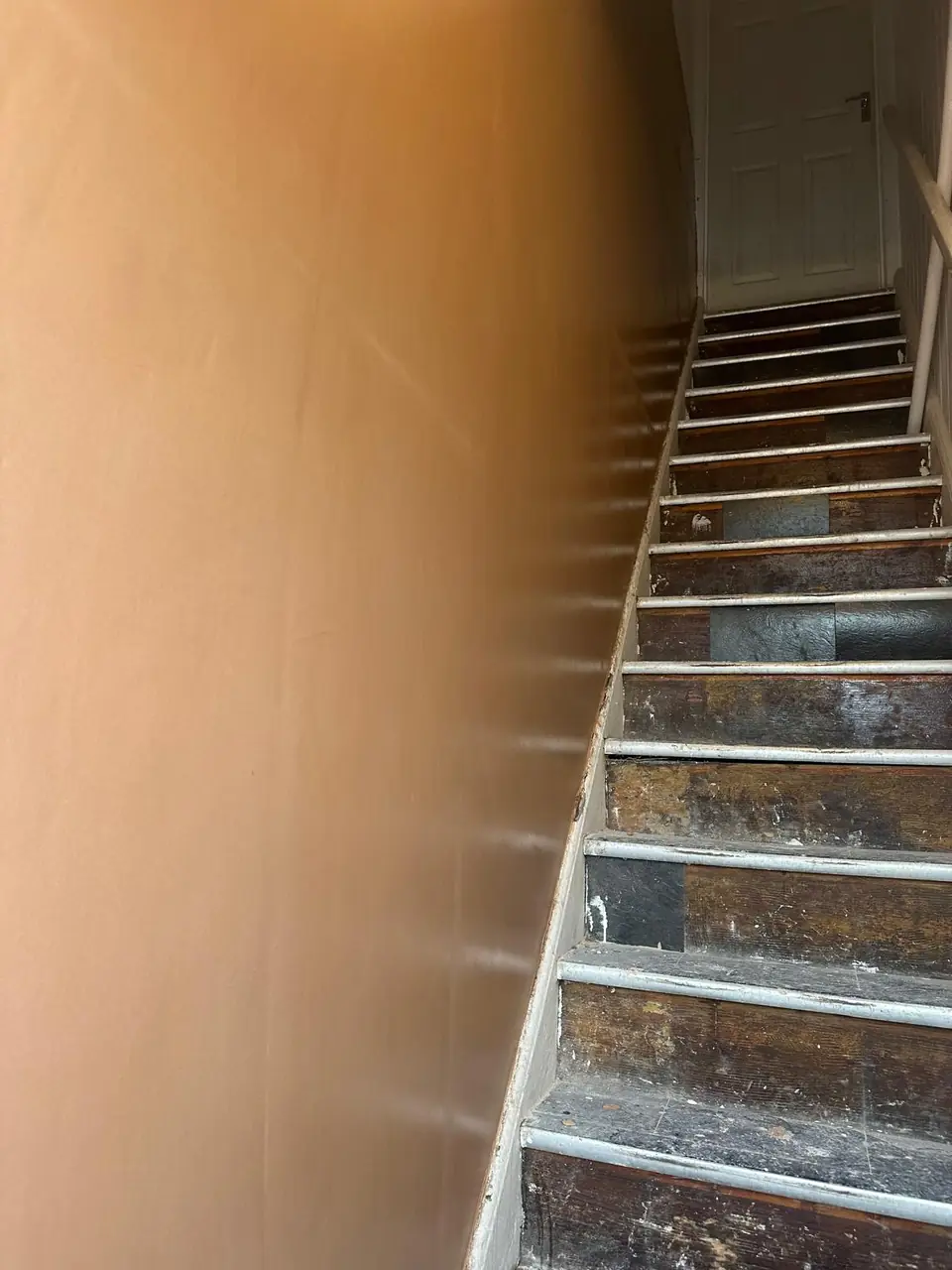
Internal work can be worth discussing where the outside of a house needs to stay as it is, or where you are renovating a particular room. Solid brick or stone walls, exposed corners and stairwells each need a slightly different assessment. John looks at existing plaster, decoration, moisture and junctions with adjacent surfaces.
An older wall needs a compatible finish throughout its layers. Adding a vapour-permeable coating over an unsuitable existing paint does not make the whole wall breathable. Active leaks, damaged pointing and persistent moisture need investigation before a new finish is considered. Cork is one option in that wider conversation.
Benefits, with the building in mind
The spray application can follow curves and irregular shapes, making it useful where a continuous finish is wanted around awkward details. Cork has thermal and acoustic properties, although a particular room’s performance depends on the complete construction. We do not promise a particular temperature change or level of sound reduction.
Vapour permeability can be useful in an appropriate wall build-up. It does not replace ventilation, heating or repairs to sources of damp. If you have condensation, explain when it appears, whether it is seasonal and which walls are affected. Those observations help John distinguish a finishing job from a problem that needs further assessment.
Preparation comes first
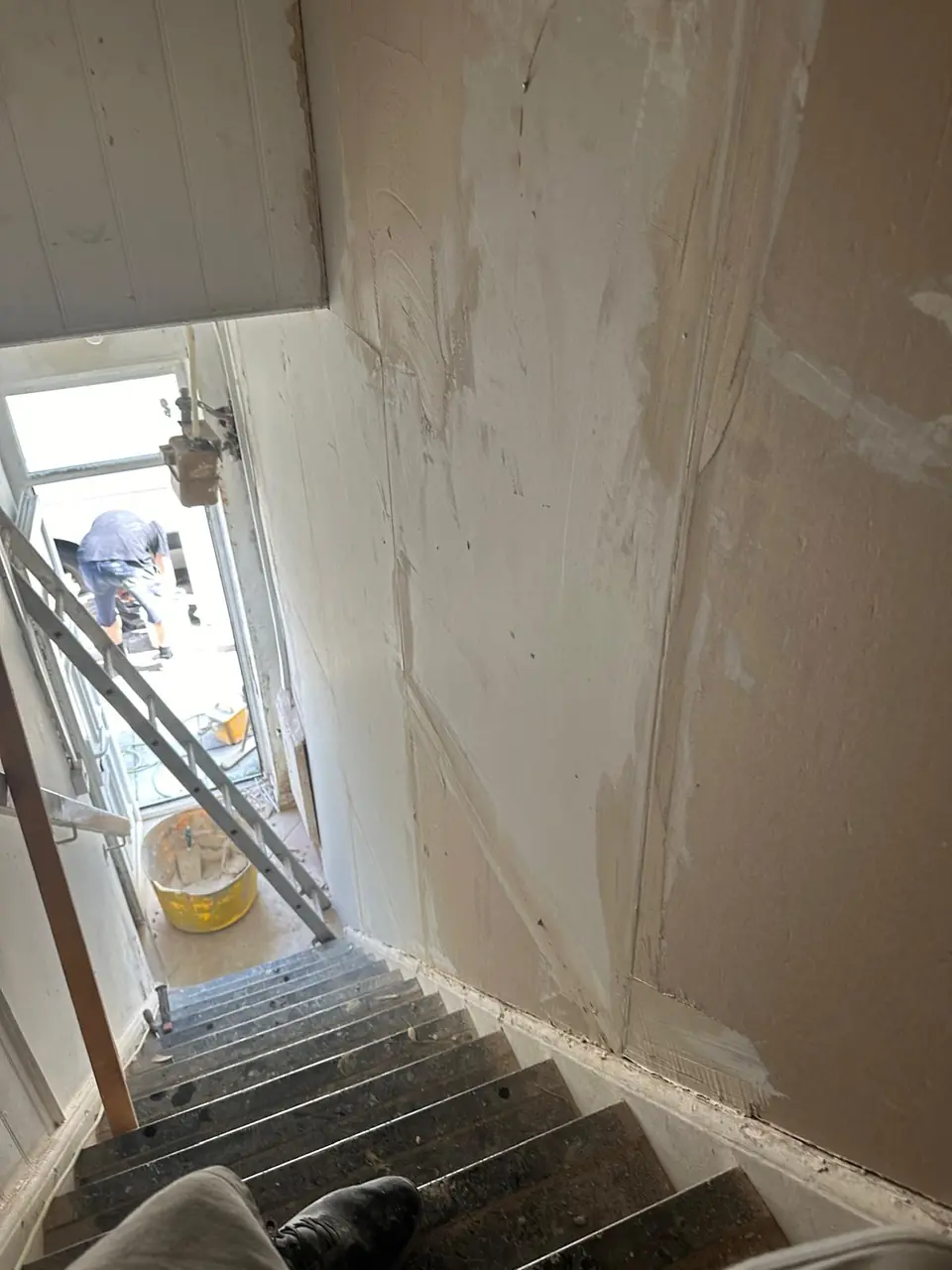
Before application, loose or unsound material needs attention and the surface must be suitable for the chosen system. John checks adhesion, identifies repairs and discusses any primer or base preparation required. Sockets, skirting boards, windows and adjoining finishes need protection, with enough clear space to work safely.
Furniture and access arrangements are agreed in advance. If a room has recently been replastered, or a leak has been repaired, drying conditions matter. Applying a new coating too soon can conceal a problem rather than resolve it. John will set out what needs to happen before work starts.
From first conversation to finished room
Start with your postcode, the room you are considering and a description of the existing finish. John can discuss the project and arrange an assessment. The quote should identify the area to be treated, preparation, application and intended finish so you know what the work covers.
Once the surface is ready, cork is applied in controlled passes following the requirements of the system and the site conditions. Drying and ventilation need to be allowed for between stages. At completion, John walks through the finish with you and explains suitable decoration and care. He is your point of contact throughout the job.
Good questions
Before you choose.
Will cork plastering leave a smooth wall?
Cork spray has its own texture. Tell John if you want a smooth decorated finish so he can explain the appropriate build-up or discuss conventional plastering instead.
Can you coat just one room?
Yes, a single room can be assessed. The boundaries of the treatment, adjacent surfaces and any moisture issues still need checking before the scope is agreed.
Will it cure damp?
A coating cannot repair a leak or remove the source of damp. John will discuss the wall’s condition and any work needed before plastering is appropriate.