Stone, brick and what lies beneath
Stone is a defining part of Bradford’s streets, from terraces in Manningham and Heaton to homes around Thornton and Queensbury. Yet similar-looking properties can have different wall build-ups, mortar repairs and coatings. A stone frontage alone does not establish which materials should be added to it.
On an older solid wall, the way moisture enters and leaves the construction needs consideration. Covering attractive exposed stone is also a significant visual change. John will discuss whether the aim is an internal coating, renewal of an already rendered elevation or a different kind of repair, with appropriate specialist assessment where needed.
Where cork fits into the discussion
Cork spray is made from cork granules mixed with a water-based binder. The spray forms a continuous textured surface over a suitable prepared background. Its thermal properties and vapour permeability can be relevant to a proposed wall finish, but performance depends on the complete build-up.
A thin cork coating should not be confused with a substantial insulation layer. If the project is intended to achieve a defined thermal improvement, that requires a suitable specification. Equally, cork cannot correct an active leak, unstable masonry or failing pointing just by covering the surface.
An internal route when the frontage should stay
For a house where the stone exterior is to remain visible, internal cork plastering may be an option to assess. Window reveals, corners and junctions with ceilings need thought, as do any existing paints and plasters. John can explain the texture and finishing options alongside conventional plastering.
If you are renovating room by room, say which spaces are occupied and what other work is planned. A practical sequence can help coordinate repairs, electrical changes and finishing. Persistent moisture should be investigated first so that fresh work is applied to a suitable background.
Exterior preparation and access
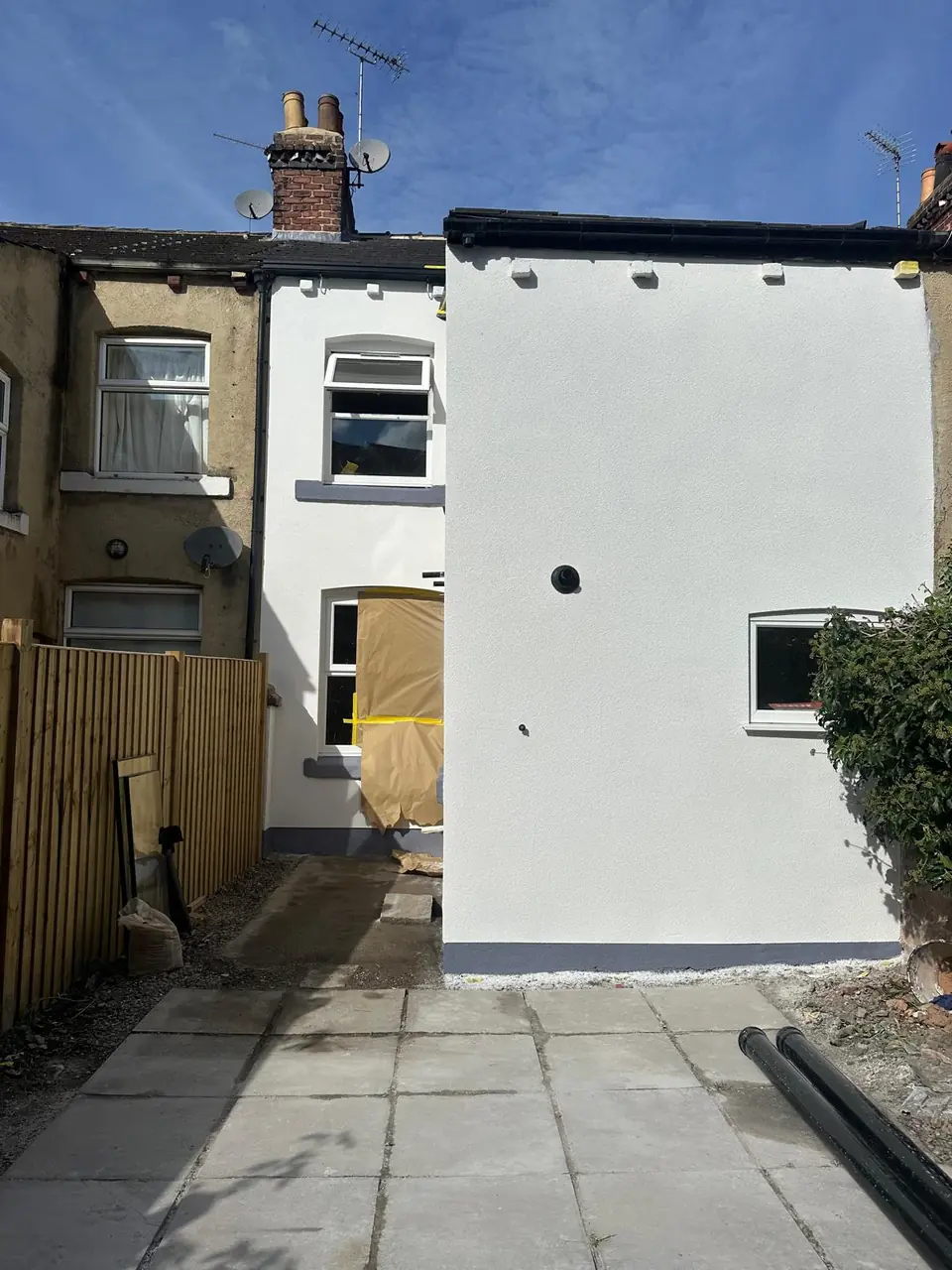
On an already rendered wall, loose areas, cracks and incompatible coatings need assessment before a new system is specified. Preparation is agreed as part of the scope. Window sills, vents and the base of the wall need to remain functional when the new coating is complete.
Terraces and hillside streets may have shared access or changes in ground level. Mention these when you contact John, together with any restrictions on the property’s appearance. Listed status and conservation considerations can affect proposed changes, so permissions need checking before work is agreed.
Bradford and the surrounding area
Eco Coatings covers Bradford alongside Shipley, Keighley and Ilkley. John is a TIWI-accredited cork plasterer with 15+ years in the trade, and is on every job. The discussion begins with your particular surfaces and priorities, whether that is a rear elevation, a stairwell or a complete exterior.
Browse our service pages to compare cork, traditional render, coloured systems and thin coat finishes. Our real project photographs can help you describe the look you prefer. For a free quote, send your postcode, property type and a short description. If you are unsure what the current finish is, simply explain what you can see.
Good questions
Your local project.
Should exposed Bradford stone be coated?
That needs individual assessment. The condition, appearance, moisture behaviour and any permissions must be considered. Cork is not an automatic recommendation for exposed stone.